
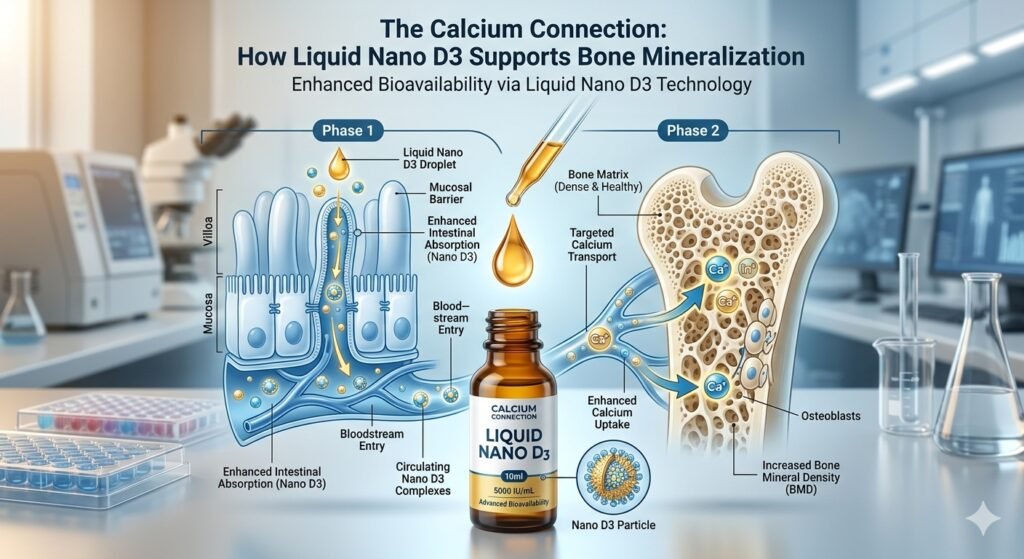
Calcium gets much of the attention when people talk about strong bones, but calcium cannot work in isolation. Vitamin D helps the intestine absorb calcium and maintain the calcium and phosphate environment needed for normal bone mineralization. This is why adequate vitamin D status matters when calcium intake is low or when the body has difficulty maintaining mineral balance. A liquid nano D3 formulation may improve the amount of vitamin D absorbed from a dose in some studies, but it should be described as a way of delivering vitamin D, not as a replacement for dietary calcium or as a guaranteed way to build stronger bones.
Quick Answer
Vitamin D supports calcium absorption in the intestine, while calcium supplies the mineral framework of bone. If vitamin D is inadequate, the body becomes less efficient at active calcium absorption, particularly when dietary calcium intake is low. Nano emulsion formulations have shown higher vitamin D bioavailability than some conventional formulations in human studies. The important distinction is that better absorption of the supplement does not automatically mean better bone outcomes. Bone health still depends on adequate calcium intake, vitamin D, protein, physical activity and overall health.
Why Calcium Needs Vitamin D
Almost all of the body’s calcium is stored in bones and teeth. Calcium provides much of the structural mineral in bone, while vitamin D helps regulate intestinal calcium absorption and calcium-phosphate balance. When vitamin D is severely deficient, calcium absorption can fall and bone mineralization can be impaired, contributing to conditions such as rickets in children and osteomalacia in adults.
What Bone Mineralization Actually Means
Bone is living tissue. It is continuously broken down and rebuilt through remodeling. New bone matrix becomes mineralized with calcium and phosphate, forming the hard structure that gives bone strength. Vitamin D is one part of this process because it supports the absorption and availability of calcium and phosphate. Adequate vitamin D does not mean that taking more vitamin D will keep increasing bone strength indefinitely.
Where Liquid Nano D3 Fits In
The value of a nano formulation is primarily about formulation and absorption. In a randomized crossover study, a 60,000 IU nanoemulsion oral solution produced higher cholecalciferol exposure than a conventional soft-gel capsule under fasting conditions. This suggests that the formulation can influence how much vitamin D becomes available in the circulation. However, the study was small and evaluated pharmacokinetics after a single dose. It did not show that nanoemulsion vitamin D prevents fractures or osteoporosis.
Calcium From Food Still Matters
A vitamin D supplement cannot supply the calcium your skeleton needs unless the product also contains calcium, and even then the amount may be modest. Food sources include milk and other dairy products, calcium-fortified beverages, tofu made with calcium salts, some fish eaten with bones, and selected leafy vegetables. Your individual calcium requirement depends on age, sex and life stage. People with kidney stones, kidney disease or other mineral disorders should ask a clinician before starting calcium supplements.
The Bigger Bone-Health Picture
Healthy bones need more than calcium and vitamin D. Weight-bearing and resistance exercise stimulate bone remodeling. Adequate protein supports the tissues surrounding and within bone. Smoking, excessive alcohol intake, prolonged inactivity, certain medicines and hormonal changes can increase fracture risk. If you are at risk of osteoporosis, your clinician may recommend bone mineral density testing and a broader fracture-risk assessment rather than relying on a supplement alone.
FAQs
Q. Does vitamin D put calcium into my bones?
Vitamin D helps your body absorb calcium and maintain calcium and phosphate levels needed for normal bone mineralization. It is one part of the process rather than a direct calcium delivery mechanism.
Q. Can nano D3 replace calcium supplements?
No. Nano D3 provides vitamin D. It does not replace dietary calcium. Whether you need additional calcium depends on your diet, age, health status and clinical situation.
Q. What else can I do to protect my bones?
Maintain adequate calcium and vitamin D intake, perform weight-bearing and resistance exercise, consume adequate protein, avoid smoking, limit excessive alcohol, and discuss osteoporosis screening with your healthcare professional when appropriate.