
Non-alcoholic fatty liver disease, now increasingly called MASLD, is quietly becoming one of India’s most common liver conditions, often showing up on a routine ultrasound with no symptoms at all. If you’ve been told you have a fatty liver, there’s a good chance your vitamin D is low too, Indian studies have found a clear statistical link between the two.
Here’s what the science actually says about that connection, and what correcting a deficiency can realistically do for you.
Quick Answer
Vitamin D deficiency is significantly more common in people with fatty liver disease, and Indian research has found that the severity of vitamin D deficiency tracks with liver-related complications like organ enlargement and fluid buildup. Correcting a genuine deficiency has been shown in clinical trials to meaningfully improve blood sugar, insulin resistance, and triglycerides in people with fatty liver, though its effect on liver enzymes themselves has been less consistent. Vitamin D is not a treatment for fatty liver disease on its own, but addressing deficiency appears to support several of the metabolic problems that drive it.
Why the Connection Makes Biological Sense
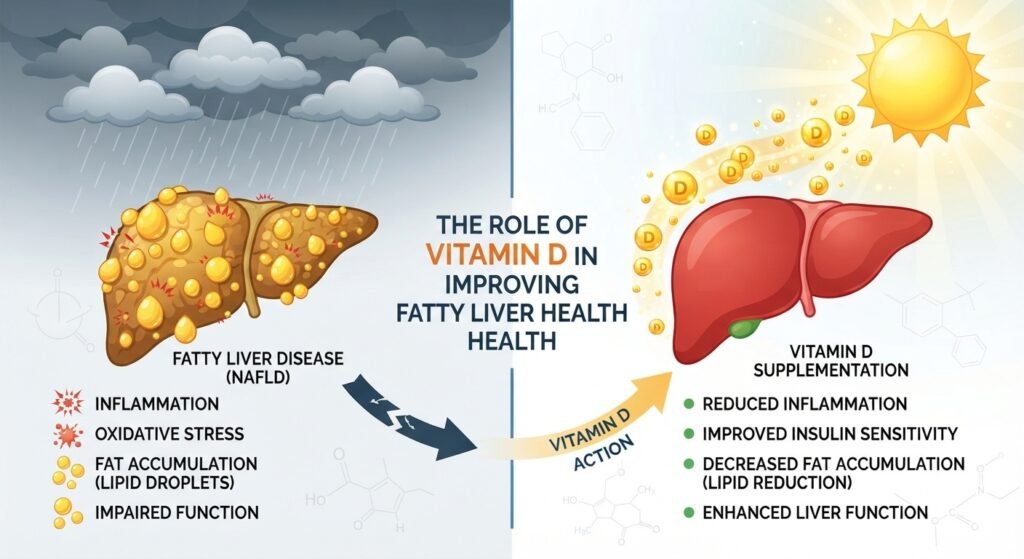
The liver plays a central role in activating vitamin D, converting it into a usable form, so liver dysfunction and low vitamin D can influence each other in both directions. Vitamin D receptors are also present in liver cells and in the fat and immune cells involved in liver inflammation. Adequate vitamin D appears to help regulate insulin sensitivity and reduce low-grade inflammation, both of which are central to how fat accumulates in the liver in the first place.
What the Research Shows
A 2023 cross-sectional study from a tertiary care center in northern India found that nearly half of patients with fatty liver disease were vitamin D deficient, and that deficiency was significantly less common in patients with a normal BMI compared with those who were overweight. The study also found that more severe vitamin D deficiency was significantly associated with complications like liver and spleen enlargement.
On the treatment side, a meta-analysis of randomized controlled trials found that vitamin D supplementation in people with fatty liver significantly reduced fasting glucose, insulin levels, and insulin resistance (HOMA-IR), with a smaller, less definitive reduction in ALT, a key liver enzyme. A more recent 2023 meta-analysis of eight trials confirmed improvements in markers like vitamin D status and glucose-related parameters, while noting that effects on liver enzymes and lipid levels were less consistent across studies.
Why Some Studies Show Different Results
This is a case where being honest about the limits of the evidence matters. Vitamin D supplementation trials in fatty liver disease consistently show benefit for metabolic markers like blood sugar and insulin resistance, but the effect on liver enzymes and overall liver fat content is much less consistent, some trials show improvement, others show none. This likely reflects differences in dose, trial duration, how advanced the liver disease was at baseline, and whether patients were significantly deficient to begin with. It’s also worth remembering that fatty liver disease has multiple drivers, obesity, insulin resistance, diet, and genetics among them, so correcting one contributing factor like vitamin D is unlikely to reverse the condition on its own.
Who May Benefit Most
- People diagnosed with fatty liver disease who haven’t had their vitamin D checked
- Individuals with fatty liver plus confirmed insulin resistance or prediabetes
- People who are overweight or obese with fatty liver, given how strongly deficiency clusters in this group
- Anyone with fatty liver and signs of more advanced disease on imaging, where the Indian data found deficiency was more pronounced
Vitamin D and Metabolic Syndrome in Liver Health
Fatty liver disease rarely occurs in isolation. It’s closely tied to obesity, insulin resistance, and abnormal lipid levels, the same cluster of problems that make up metabolic syndrome. Because vitamin D appears to influence several of these factors simultaneously, correcting deficiency may offer a broader metabolic benefit that extends beyond the liver itself, even when its direct effect on liver enzymes is modest. This is one reason vitamin D testing is increasingly considered a reasonable part of the broader work-up for anyone diagnosed with fatty liver.
What You Can Do About It
- Get tested alongside your liver panel: If you’ve been diagnosed with fatty liver, ask for a 25-hydroxyvitamin D test as part of your evaluation.
- Focus on the fundamentals first: Weight management, reduced sugar and refined carbohydrate intake, and regular physical activity remain the primary treatments for fatty liver disease.
- Don’t expect vitamin D to reverse fatty liver alone: Use it as a supportive measure for related metabolic issues, not a stand-alone fix.
- Sensible sunlight and diet: Regular sun exposure and vitamin D-rich foods help maintain levels between tests.
- Supplement only under medical guidance: Your doctor can determine an appropriate dose based on your deficiency severity and overall liver function.
FAQs
Q. Can vitamin D reverse fatty liver disease?
No. It doesn’t reverse the condition, but correcting a genuine deficiency may improve related metabolic markers like blood sugar and insulin resistance.
Q. Why are so many Indians with fatty liver also vitamin D deficient?
The overlap likely reflects shared risk factors, obesity, indoor lifestyles, and limited sun exposure, that drive both conditions independently.
Q. Will correcting my vitamin D improve my liver enzyme levels?
The evidence here is mixed. Some trials show modest improvement, others show none, so it shouldn’t be relied on as a liver enzyme treatment.
Q. Should everyone with fatty liver take a vitamin D supplement?
Only if a blood test confirms deficiency. Supplementing without a confirmed low level, especially if you have multiple conditions, isn’t supported by the evidence.
Q. What’s the most effective treatment for fatty liver disease?
Weight loss, dietary changes, and exercise remain the most evidence-backed approaches; vitamin D correction can be a supportive addition when deficiency is present.