
Of all the conditions linked to vitamin D, osteoporosis is the one where the science is most settled. If you’ve been diagnosed with osteoporosis, or you’ve had a fragility fracture, checking and correcting your vitamin D isn’t just a good idea, it’s a core part of standard treatment, and the evidence behind it is some of the strongest in all of vitamin D research.
Here’s what the data actually shows, and why bone health is the area where vitamin D correction matters most.
Quick Answer
Vitamin D deficiency is extremely common among Indians with osteoporosis and fragility fractures, and correcting deficiency, especially when combined with adequate calcium, has been shown in large trials to meaningfully reduce the risk of hip and other fractures in older adults. This is one of the few areas in vitamin D research where the evidence for a real, direct treatment benefit is strong and consistent, provided vitamin D is paired with sufficient calcium intake. What this actually means: if you’re at risk of osteoporosis, testing and correcting vitamin D deficiency, alongside calcium, is a genuinely evidence-backed step, not just a precaution.
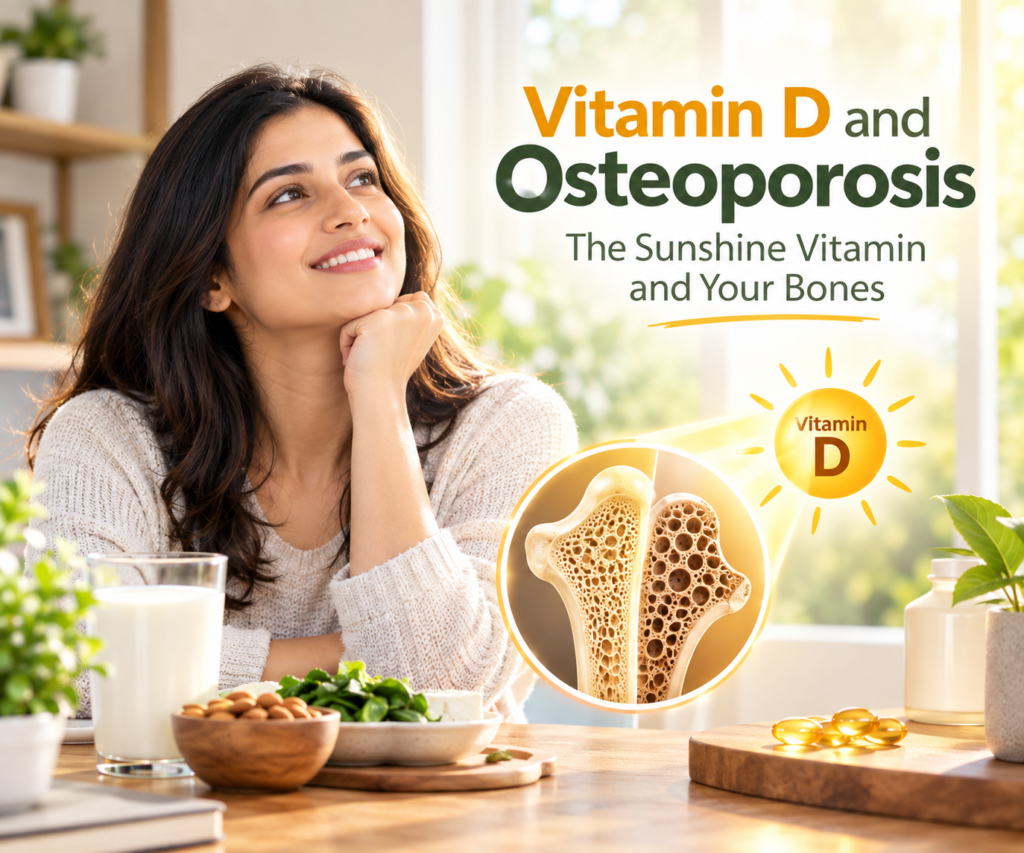
Why the Connection Makes Biological Sense
Vitamin D’s most well-established role is enabling the body to absorb calcium from the gut. Without adequate vitamin D, even a calcium-rich diet won’t translate into strong bones, since the body simply cannot absorb enough calcium to meet its needs. Over time, this forces the body to pull calcium from bone tissue to maintain blood calcium levels, gradually weakening bone density and increasing fracture risk, particularly at the hip and spine.
What the Research Shows
Indian data illustrates just how significant this problem is. A 2021 study from a tertiary trauma center in Karnataka found a high prevalence of vitamin D deficiency among patients with osteoporotic hip fractures, reinforcing that this is a major, modifiable risk factor in the Indian population. Similar patterns have been documented across other Indian orthopedic centers treating fragility fractures in older adults.
On the treatment side, a 2023 systematic review and meta-analysis found that daily vitamin D3 supplementation combined with calcium reduced hip fractures by around 25 percent and non-vertebral fractures by around 20 percent in older adults, with even greater benefit at higher doses. This is a substantial, clinically meaningful effect, exactly the kind of evidence that’s less common in some of vitamin D’s other proposed benefits.
Why Some Studies Show Different Results
There’s an important nuance here worth being upfront about. A large 2022 randomized trial found that vitamin D supplementation alone, without ensuring adequate calcium intake, did not significantly reduce fracture risk in the general older adult population. This isn’t a contradiction, it’s a clarification: vitamin D and calcium work together, and vitamin D alone cannot compensate for inadequate calcium intake. The strongest, most consistent fracture-prevention benefits come specifically from combined vitamin D and calcium supplementation, particularly in people who are genuinely deficient to begin with, rather than from vitamin D given in isolation to people with adequate calcium and vitamin D status already.
Who May Benefit Most
- Postmenopausal women, who face the highest osteoporosis risk due to hormonal bone loss
- Anyone with a prior fragility fracture or a diagnosis of osteoporosis or osteopenia
- Older adults, especially those with limited sun exposure or low dietary calcium intake
- Anyone with confirmed vitamin D deficiency, regardless of current bone density, given how directly deficiency impairs calcium absorption
Vitamin D in Menopause and Bone Health
Bone loss accelerates sharply after menopause, as declining estrogen levels reduce the body’s ability to retain bone density. This makes postmenopausal women a particularly important group for vitamin D and calcium correction, since a deficiency compounds the bone loss already happening due to hormonal changes. For Indian women, who often have lower vitamin D levels to begin with due to indoor lifestyles and limited dietary calcium, the postmenopausal years are a critical window for proactive bone health management.
What You Can Do About It
- Get tested if you’re at risk: A 25-hydroxyvitamin D test is a reasonable step for postmenopausal women, older adults, and anyone with a fragility fracture history.
- Pair vitamin D with adequate calcium: The strongest evidence for fracture prevention comes from the two together, not vitamin D alone.
- Weight-bearing exercise matters too: Physical activity that loads the bones helps maintain density alongside adequate nutrient status.
- Sensible sunlight and diet: Regular sun exposure and calcium-rich foods like dairy, ragi, and leafy greens support both nutrients together.
- Follow medical guidance on dosing: Your doctor can recommend appropriate vitamin D and calcium doses based on your bone density results and deficiency severity.
FAQs
Q. Does vitamin D alone prevent osteoporosis and fractures?
Not reliably on its own. The strongest evidence for fracture prevention comes from vitamin D combined with adequate calcium intake, not vitamin D in isolation.
Q. Why is bone health the area with the strongest vitamin D evidence?
Because vitamin D’s role in calcium absorption is a direct, well-understood physiological mechanism, unlike its more indirect, less settled roles in conditions like diabetes or blood pressure.
Q. Should I take a vitamin D and calcium supplement together for bone health?
This is a reasonable question for your doctor, especially if you’re postmenopausal, older, or have a fracture history, since the combination has the strongest supporting evidence.
Q. How common is vitamin D deficiency among Indians with fractures?
Very common. Indian studies consistently find high deficiency rates among patients with osteoporotic and fragility fractures.
Q. Is weight-bearing exercise as important as vitamin D and calcium for bone health?
Yes, it works through a different mechanism and is considered a complementary, not alternative, part of bone health management.